If you’re a POS vendor, you’ve probably seen this happen: a merchant asks about payments, and to keep things simple, the lead gets passed to a big-name Payment Service Provider (PSP). It feels like a win — the task is off your desk, and the merchant gets their solution.
But here’s the reality: you just handed over your best growth engine.
When you refer a lead to a big-name PSP, you’re essentially handing over a lifetime of recurring revenue for a one-time "thank you" check. You’ve worked hard to build a relationship with that merchant, only to leave them at the mercy of a provider that often serves up rigid pricing and clunky, "one-size-fits-all" tech that doesn't actually fit their business.
And yet payments are not a side feature. They are the final step in the customer journey you have already built.
The Problem: Payments Aren’t a Side Feature
Let’s be real: Payments can be a headache. Building and maintaining a compliant, secure payment infrastructure requires significant investment — from ongoing product development and PCI compliance to ongoing regulatory updates and risk management.
For most POS vendors, that level of operational overhead isn’t part of their core focus or financial model. As a result, payments are often handled externally — and the revenue and control that come with them follow the same path.
And over time, that separation creates a structural disconnect between your platform and the transaction itself.
A Partnership Built on Your Terms
That’s exactly what Tidypay is for. We deal with the complicated stuff — compliance, technical development and integrations, security — so you can focus on the part you’re best at: your merchants. You keep the relationship, we keep the tech running smoothly.
What Changes When You Keep Payments Inside:
When you stop passing leads and start integrating payments, the shift is massive:
- For You: You earn on every transaction that flows through your system and gain the freedom to price your services, adding your own markups and building offers that reflect your brand’s value. Integrated payments also help streamline operations, reduce support headaches, and speed up transactions by up to 30%.
- For Your Merchant: One point of contact, no bouncing between providers. Fully integrated into your POS, it simplifies onboarding and daily operations. Studies show that 68% of customers rate seamless checkout as a top driver of satisfaction, and optimized payment flows can increase transaction completion by up to 40%.
A Real-World Example
To see how this works in the wild, think about the impact on a high-volume hospitality business. We recently worked with a major POS provider whose clients were struggling with a "terminal bottleneck."
Think about a busy restaurant terrace during a rush. When 15 servers have to share just one or two stationary terminals, service hits a physical wall. Every time a server walks away from their tables to queue for a device, they lose visibility on their section. They miss the guest trying to order another round of drinks, and they can’t clear tables fast enough to seat the next group waiting at the door.
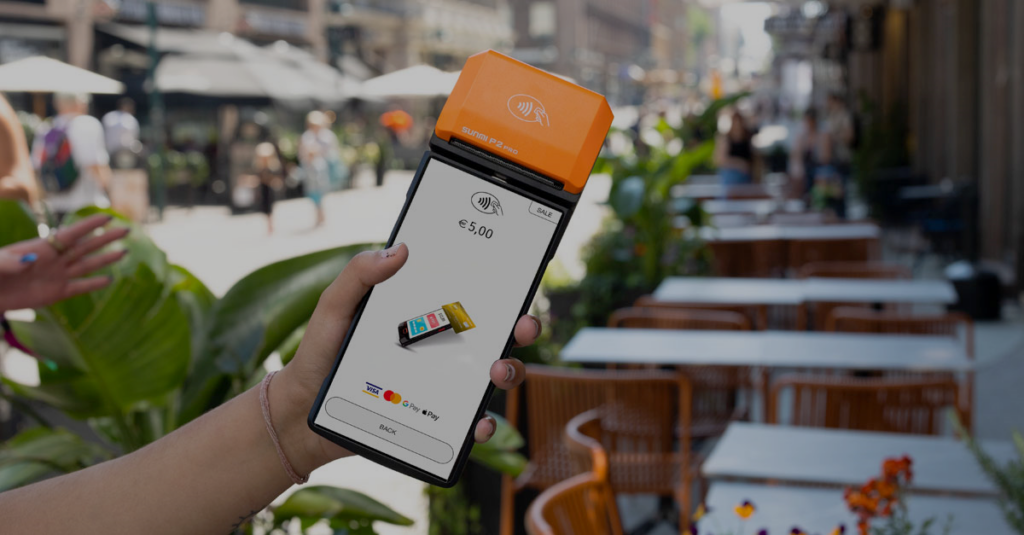
By moving to a mobile solution, you're essentially removing the 'commute' to the cash register. Payments happen right at the table using the devices servers already have in their pockets. This doesn't just make life easier for the staff; it keeps the rhythm of service moving. As we explored in this article on How Inefficient Payments Are Secretly Draining Your Profits, these small technical bottlenecks are exactly what chip away at long-term loyalty and your brand’s reputation.
The Last Mile of Your Merchant Relationship
Payments are often treated as an extension of the product, when in reality they shape the entire experience. By bringing payments inside your own ecosystem, you’re not just adding a feature, but you are in control of the full transaction journey. We handle the infrastructure and compliance. You remain the trusted solution your merchants rely on.
See how much revenue might be slipping through the cracks in your own system. Let’s run the numbers.