
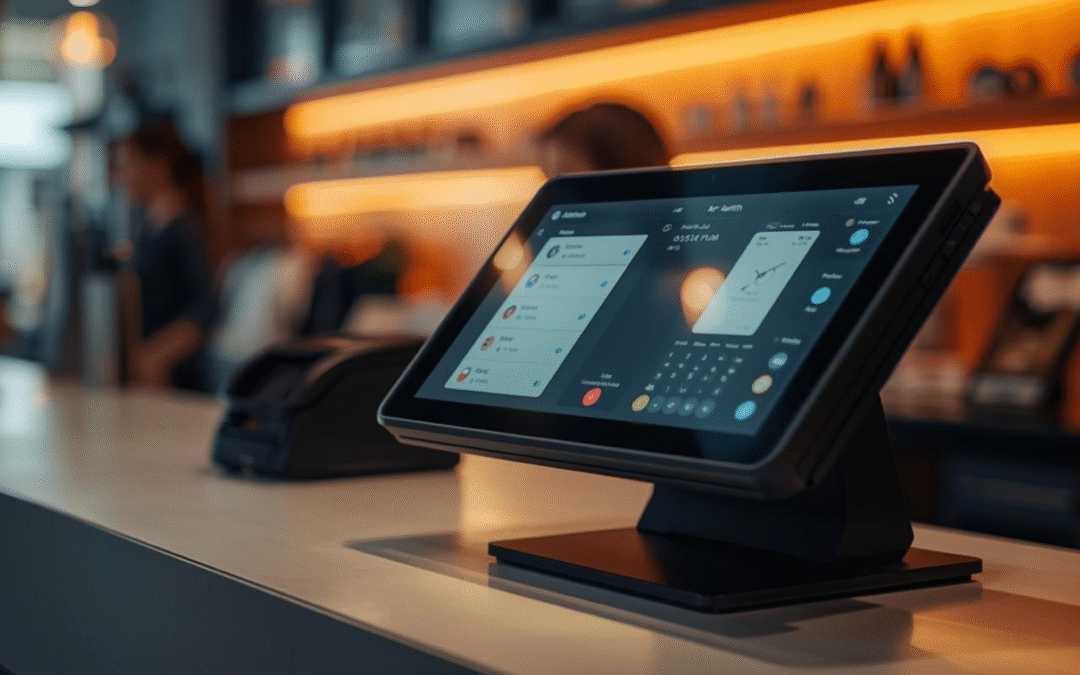
What point-of-sale (POS) providers should consider when building payment-enabled solutions for merchants
In the world of commerce, payments often look simple from the outside: a tap, a chip read, or a digital checkout. But behind that moment lies a complex system of software, hardware, networks, and integration layers that POS distributors and solution providers must navigate. As we move through 2026, these systems continue to evolve — not through dramatic disruption, but through steady shifts in how payments are processed, managed, and delivered to merchants via fully integrated solutions.
From hardware-heavy to software-first architecture
Traditionally, POS systems were built around dedicated hardware — fixed terminals installed at the counter. Today’s POS landscape is increasingly shaped by software-centric architectures that run across multiple devices and cloud-connected environments. Industry research consistently points to software flexibility and modularity becoming more important than continuously adding new hardware features (McKinsey, 2023).
Cloud-enabled POS platforms and modular payment software allow solution providers to scale deployments, roll out updates centrally, and integrate payments with surrounding business systems such as inventory management or reporting tools. This approach also reflects merchant expectations for adaptability and reduced operational overhead.
Tidypay operates in the payments layer and is designed to integrate into existing POS environments, rather than delivering the full POS for the merchant. Everytime our technology is combined with a POS it becomes something unique without need for customisation.
When “more functionality” adds complexity
Feature-rich solutions can look compelling, but additional functionality often comes with hidden costs. As POS environments grow more complex, merchant onboarding times increase, training requirements expand, and ongoing support becomes more resource-intensive. Research shows that complexity is a growing operational challenge for solution providers managing multi-layered POS stacks (BCG, 2024).
For POS distributors, this creates a balancing act: adding capabilities while keeping solutions maintainable for both merchants and internal support teams. In many cases, tightly integrated payment flows and well-defined system boundaries provide more long-term value than broad but fragmented feature sets.
Tidypay focuses specifically on payments, allowing POS distributors to embed payment functionality without replacing or expanding their POS system’s setup. In essence they can embed payments while outsourcing the complexity.
The strategic role of POS distributors and solution providers
POS vendors and solution providers play a central role in shaping how merchants experience payments. Independent software vendors (ISVs) and payment service providers (PSPs) increasingly bundle payments alongside core POS functionality, creating more cohesive solutions for merchants. McKinsey highlights how ISVs are expanding their role by integrating payments and adjacent services into broader commerce platforms (McKinsey, 2022).
In this setup, payment solution providers (PSPs) are responsible for translating complex payment infrastructure into systems that merchants can rely on day to day. This includes selecting stable integrations, managing certification and compliance requirements, and ensuring that payment logic fits naturally into the merchant’s operational flow.
Tidypay positions itself within the payments value chain, working alongside POS distributors and established acquiring and network partners.
What matters as we look into 2026
Several broader developments continue to influence how POS and payment systems evolve:
- A growing majority of euro-area consumers prefer cards and other non-cash methods at the point of sale — 55% in 2024 — underscoring continued consumer-driven adoption of cashless payments across Europe (European Central Bank, SPACE survey 2024).
- Increased emphasis on software-led POS models, enabling remote updates and centralized management (McKinsey, 2023).
- Sustained growth of the POS payments market, reflecting long-term adoption across retail, hospitality, and service industries (Statista, 2024).
For POS distributors, these trends point to priorities that extend beyond individual features: reliability, scalability, and alignment with merchant workflows remain central as systems become more interconnected.
Closing: the least noticeable experiences often matter most
For POS distributors and solution providers, the evolution of payments toward 2026 reinforces a familiar principle: the best payment experiences are often the ones merchants barely notice. As the underlying infrastructure grows more capable, success increasingly depends on how well complexity is managed behind the scenes.
By aligning software architecture, integrations, and support models, solution providers can deliver payment-enabled POS solutions that feel stable and intuitive to merchants — even as the ecosystem underneath continues to change.
Within this landscape, Tidypay sits in the payments layer, integrating into existing POS environments and supporting solution providers as part of a broader payments ecosystem.